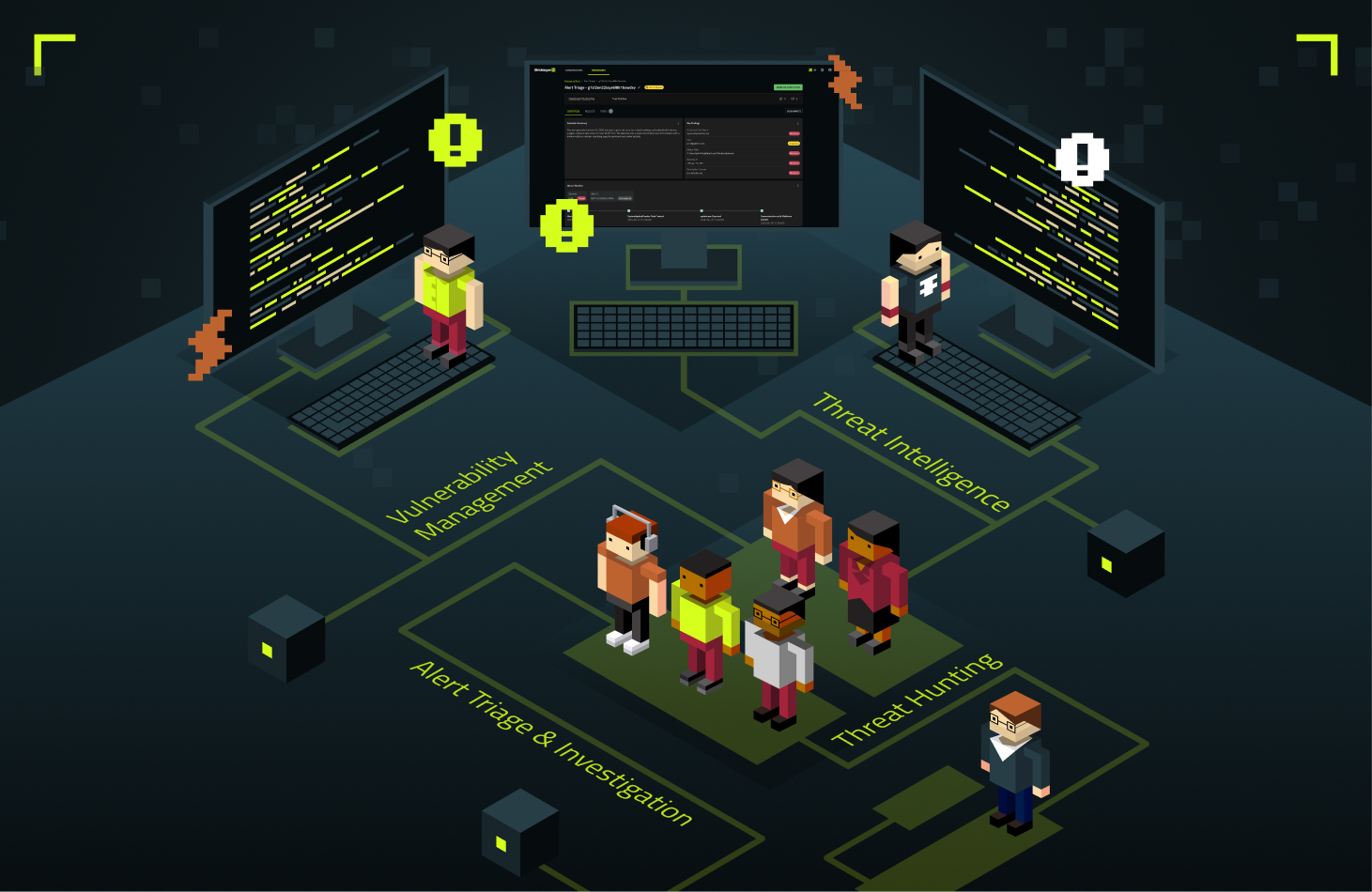
Vulnerabilities don't exist in isolation. Your prioritization shouldn't either.
Most teams prioritize by score. Bricklayer prioritizes by risk; evaluated against real asset exposure, identity access, and active threats in your environment. Reduce time spent on low-impact vulnerabilities. 100% auditable by design.
I can perform a vulnerability management workflow using the currently available vulnerability intelligence sources, Qualys integrations, asset inventory systems, policy analysis agents, and ServiceNow automation capabilities.
Proposed investigation plan
Check for new CVE announcements.
Check vulnerable systems in Qualys.
Determine priority level of affected assets.
Make determination on patch viability.
Create ServiceNow ticket for patching.
Investigation in progress
#
Task
Agent
Status
Compiling findings…
Findings so far
Vulnerability analysis identified CVE-2020-0796 as an actively monitored vulnerability requiring remediation review across organizational assets. Vulnerability intelligence and Qualys scanning confirmed the presence of affected systems within the environment.
Asset inventory and policy inventory analysis determined that affected systems span multiple organizational asset categories, including executive devices, standard employee endpoints, contractor devices, and core infrastructure systems.
Executive devices and core infrastructure systems were classified as the highest remediation priority due to elevated monitoring requirements, privileged access, operational sensitivity, and change control considerations. Standard endpoints were categorized as medium priority, while contractor devices were categorized as lower priority due to VLAN segmentation and reduced access levels.
Security policy analysis confirmed that patch viability and remediation timelines must align with organizational patch management standards and change control requirements, particularly for infrastructure systems supporting critical business operations.
ServiceNow automation workflows successfully generated a remediation ticket for coordinated patch deployment activities associated with CVE-2020-0796. The ticket included affected assets, remediation priority classifications, patching guidance, and escalation details required for operational execution.
Vulnerability management workflows confirmed that recurring monitoring, validation scans, and remediation tracking processes are operational and capable of supporting continued vulnerability lifecycle management activities across the environment.
Drafting recommendations…
Recommendations
Recommendation
Procedure ready
Requires approval
Status
Action
Prioritize remediation for executive devices and critical infrastructure
Accelerate patch deployment for assets affected by CVE-2020-0796 given elevated operational sensitivity and organizational impact.
Yes
Yes
Not started
Staged patch deployment for standard endpoints and contractor devices
Roll out patches in phases aligned with organizational patch management policies and approved maintenance windows.
Yes
Yes
Not started
Change control review for infrastructure patching
Route infrastructure systems through elevated oversight and operational coordination where change risk is highest.
No
No
Not started
Expand continuous vulnerability monitoring and Qualys validation scans
Improve coverage for newly deployed systems and unmanaged assets so exposure does not persist between scan cycles.
Yes
No
Not started
Review vulnerability management procedures and automation dependencies
Tighten escalation workflows and reporting accuracy to speed future remediation coordination.
Hi, I'm your Bricklayer Assistant. I can help you design and execute security workflows such as alert investigations and vulnerability management through conversation.
Connects to your stack
THE PROBLEM
High scores don't always mean high risk.
Vulnerability management is full of data, but short on clarity.
It runs in isolation from the rest of security operations, disconnected from active threats, exposure, and what's actually happening in the environment.
As a result, teams patch what looks critical, while real risks slip through.
THE APPROACH
What Coordinated AI Agents Actually Look Like.
With Bricklayer, vulnerability management is handled by a coordinated workforce of AI agents under your team's command, working with the tools you already use. Your team, now with the experts they've always needed.
Deep expertise across your existing tools and disciplines.
Investigates in parallel across areas of responsibility.
Shares context across every step, nothing gets lost.
Decisions are made with full visibility.
Outcomes and learnings improve over time.
Every decision is governed, consistent, and auditable.
FROM CONVERSATION TO COMMAND
Five steps. One governed workflow.
Security investigations don't fail for lack of data. They fail for lack of coordination. Here's how Bricklayer turns a conversation into organized, executed, and governed action across your SOC.
STEP 01Conversation
Converse With Assistant.
Turn natural language into structured security workflows. Designed, adjusted, and ready to execute.
Conversation-driven design
Build an investigation plan
Review and refine the plan
Execute with one click
Save and reuse workflows
STEP 01
Converse With Assistant
Reference screenshot
/images/use-cases/convos/vuln-management.png
STEP 02Reporting
Investigation Reports.
Generate structured reports and audit-ready evidence packages for analyst review and compliance.
Based on a deployment in a global high-tech company managing CVE-scale vulnerability programs:
Global high-tech company
10.2-minute average assessment time
26,600+ hours saved
Global high-tech company
$1.6M+ cost savings
Continuous validation across the asset base
WHY BRICKLAYER
A workforce, not a workflow.
Most AI SOC platforms automate the work. Agents operate independently. Context resets between steps. And when something goes wrong, there's no clear record of why a decision was made.
Our AI agents go farther. They share context, work as a coordinated team, and provide full visibility for analysts. Bricklayer's agentic cybersecurity platform is a workforce for the AI SOC, operating under human control.
ONE PLATFORM
Bricklayer Connects Your Security Operations
One platform aligned to how your SOC works. Bricklayer unifies the workflows that typically live across disconnected tools. No rework required. Just expansion and opportunity.